

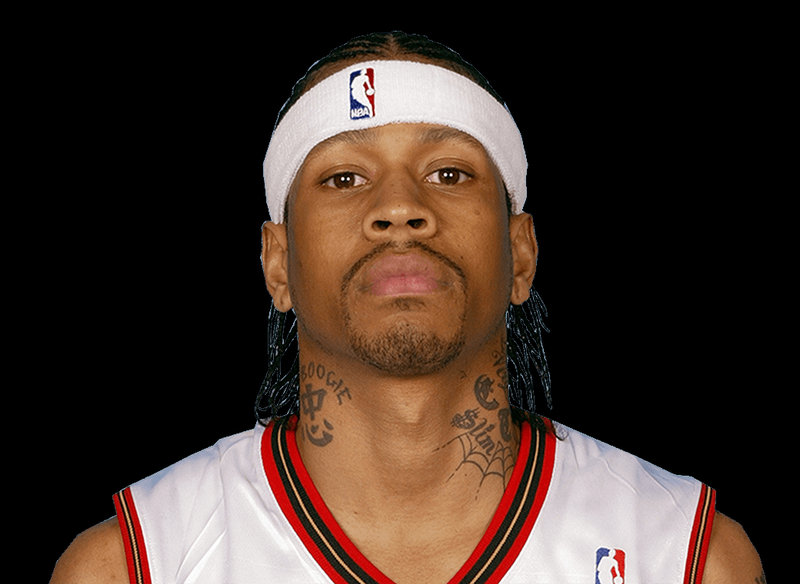
Why Was Allen Iverson More Disruptive in Passing Lanes Than People Recall?
What made Allen Iverson such a force in the passing lanes? This question prompts a spirited discussion among basketball fans and analysts, who enjoy what we now call a “low-key” defensive performance, which is partly what made Iv/spart by Iverson. He was dazzling on offense, of course, but his work as a defender, especially in the passing lanes, is an underrated part of his story. Even the sometimes criticized practice of correlating defensive value with certain advanced statistics cannot do justice to what Iverson accomplished on the floor. Game influence and passing lane disruption aren’t always captured, let alone properly appreciated.
Understanding Iverson’s Defensive Style
Relentless determination propelled Allen Iverson through his entire career. He was 6 feet tall and a guard, but you couldn’t call him small when you saw what he could do on the court. He was quick, but not just quick; he was one of those athletes you see in the all-time-great category when it comes to speedy decisiveness and an ability to change an angle. He was low to the ground, which made him hard to defend and allowed him to get up and under when playing with the rim. His hand-eye coordination was insane, which is why you could say that he played with a kind of madness that made you love him and made you fear him if you were on the opposite side of the court. His 2.2 steals per game rank up with the best of all time. A 6-foot, 171-pounder averaging that many steals every night is insane. You either have to be really good at getting to the ball or really good at not getting caught. Iverson was both.
During the 2000-2001 NBA season, the league’s scoring champion was also its leader in steals. Allen Iverson averaged 2.5 steals per game and for some reason, fans don’t usually associate Iverson with great defense, as he was actually a good defender.
In addition, he could read the other team’s players and sense what they were going to do next, which enabled him to pull off many successful steals. More than once, he baited opponents into making awful decisions—like passing the ball to him—and he took full advantage of those mistakes. Add to that his being in the right place at the right time, and you had a guy who was, for all intents and purposes, a disruptor in passing lanes.
Why Was Allen Iverson More Disruptive in Passing Lanes Than People Recall?
This inquiries invites a deeper exploration into Iverson’s defensive metrics. Alone, stats don’t encapsulate the full extent of how much he impacted the game. His on-ball pressure was remarkable; he often forced opponents into difficult shots or turnovers. In the 2003 playoffs, for example, Iverson’s defensive efforts against the New Jersey Nets showcased his ability to pressure ball handlers, leading to a key victory for his team.
Despite Iverson’s size, his defensive rating was competitive and often around 100. That’s impressive for a guard.
Win Shares on Defense: The number of wins added to a team by a player through defensive plays. These are not exact science, and no statistic is. But they are a way to measure how much a player probably helped his team. That being said, Iverson might not be the guy you’d expect to have a high number here. His is high.
Performance in the playoffs took place at an even higher intensity level than during the regular season. Foes found it even less desirable to try to score when Iverson was guarding them. During the playoffs, IVerson averaged 2.25 steals a game to go with 26.4 points. He picked up his defensive aggression one more notch and pushed it to 110.
Analyzing Iverson’s Impact on Opponents
The way Allen Iverson is a disruptive force in passing lanes directly influences the game strategies of his opponents. Coaches have to think about Iverson’s defensive capabilities when game planning for the offense. And this pressure affects how teams in the league approach not only ball movement but also spacing. For example, opponents tend to limit their passing options. Instead, they concentrate on securing the ball and getting into their offense, which is almost an illusion of success.
His knack for reading the play allowed him to jump passing lanes, making his presence felt even when he wasn’t contesting a shot. Anticipating the throw as well as the intended receiver’s next move, he often directed the ball to the floor and away from the basket before it could reach its destination. He always had a clear escape plan. Several times a game, this would lead to his trying out for the role of a defensive back in the NFL.
As a result, teams often altered their offensive strategies to counter his defensive ferocity. They employed various formations and even utilized ball handlers who were less predictable, which says a lot about the kind of respect he commanded on that end of the floor.
Lessons from Iverson for Modern Defenses
Contemporary teams can derive useful insights from how Iverson approached defense. His turnover-forcing abilities weren’t solely a function of physical gifts; they were also about a certain mindset and type of effort, not to mention some good old-fashioned strategic foresight. Coaches today might do well to emphasize these principles in their programs.
Implementing the following strategies inspired by Iverson is worth considering.
- Anticipation Skills: Prepare participants to expect movements and read defensive formations. This cognitive part is very important.
- Ball Pressure: Urge unyielding pressure on the ball handlers to make them take undesirable decisions.
- Develop a fast-break strategy that capitalizes on turnovers, much like Iverson did. This means you want a plan for when your opponent makes mistakes, so you can score in a hurry and maintain pressure. A team that turns the ball over a lot and a team that plays fast tend to be two sides of the same coin. If you’re going to press and play fast, you also need to make the opponent turn the ball over.
Teams can increase their defensive effectiveness and develop players who can disrupt passing lanes to the extent that they are like Iverson by fostering the skills he displays.
Conclusion
To sum up, what makes Allen Iverson more disruptive in passing lanes than most people remember? The response is found in a cocktail of athleticism, intelligence, and awareness unique to Iverson. He is remembered first and foremost as a scorer, but by some combination of intuition and the well-honed techniques of a thief, he was a much more effective deflec-tor (and defender) of passes than is widely acknowledged.
Explore More on us
Discover insightful blogs on our Blogging Space, check our SoloStat Score Explanation, and learn more about NBA All-Defensive Team.