

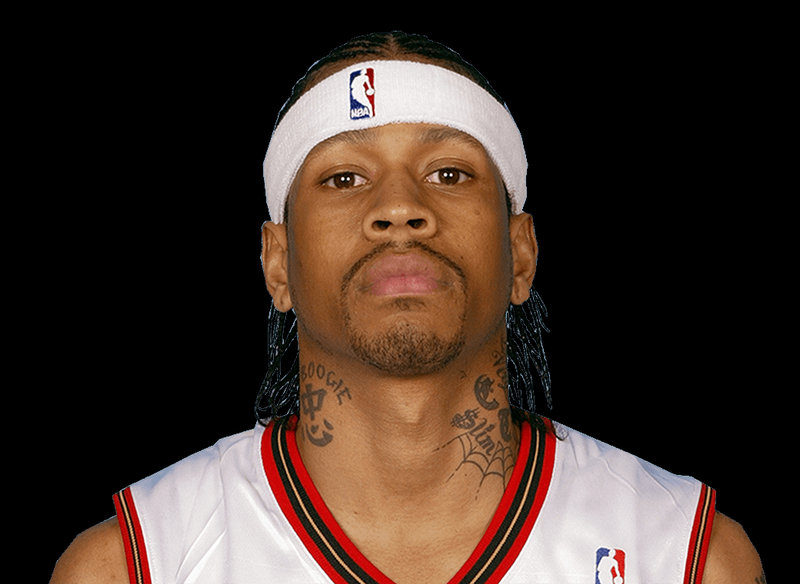
Could Allen Iverson Adapt to Today’s Advanced Defensive Schemes?
The question, “Could Allen Iverson adapt to today’s advanced defensive schemes?” is a compelling one. As one of the most electrifying scorers in NBA history, Iverson redefined the role of the guard during his era. However, the landscape of basketball has evolved significantly since his prime, particularly in defensive tactics. This post explores whether Iverson could thrive in today’s game where defenses are more sophisticated and specialized.
Understanding Allen Iverson’s Game
Allen Iverson was a unique talent. Standing at just 6 feet tall and weighing around 165 pounds, he was one of the shortest players in a league dominated by taller athletes. Despite his size, Iverson’s speed, agility, and scoring ability made him a nightmare for defenders. In his prime, he averaged 26.7 points per game and won the MVP award in 2001.
- Strengths: Iverson’s quick first step and ball-handling skills allowed him to penetrate defenses effectively.
- Scoring Ability: He was a prolific scorer, often using his crossover dribble to create space for his jump shot.
- Competitive Drive: His relentless drive and toughness set him apart from many peers.
However, it wasn’t all perfect. Iverson struggled with his shooting efficiency, particularly in his later years. He had a career field goal percentage of 42.5%, which raises questions about how he would fare against modern defensive schemes that emphasize spacing and efficiency.
Could Allen Iverson Adapt to Today’s Advanced Defensive Schemes?
Today’s NBA defenses employ various strategies that heavily focus on analytics and high-level scouting. Teams use advanced metrics to profile both offensive players and their specific weaknesses. This raises the question: how would a player with Iverson’s skill set adapt?
- Switching Defenses: Modern teams frequently switch on screens, allowing defenders to neutralize mismatches. Iverson faced physical defenders who could match his speed but lacked the height and length of today’s defenders. Would his quickness be enough against the likes of 6’7″ athletes who have the size and speed to guard multiple positions?
- Help Defense: The prevalence of help defense and the increased reliance on shot-blockers can frustrate a guard like Iverson. In his era, help defense was often slower and less coordinated. Currently, players like Rudy Gobert or Bam Adebayo can recover quickly to contest shots, posing a new challenge for Iverson. Furthermore, the current emphasis on three-point shooting forces defenses to stretch out, potentially providing more driving lanes for a player like Iverson. If defenders are preoccupied with spacing, could Iverson use that to his advantage? It’s possible his speed might still allow him to capitalize on gaps created by defenses focusing on perimeter threats.
Statistical Context: The Evolution of Defense
To better understand the potential challenges Iverson might face, consider the evolution of defensive statistics. In the late 1990s and early 2000s, the average points allowed per game was significantly higher than today. For instance:
- 1999-2000: The average points allowed was around 99.5.
- 2021-2022: The average dropped to approximately 105.6 points.
The sharp decrease in points allowed indicates a shift in defensive effectiveness. Additionally, teams now utilize metrics like Defensive Box Plus/Minus (DBPM) to evaluate player impact on defense. In this realm, Iverson’s defensive metrics were average at best, making it crucial for him to adapt or potentially alter teams’ dynamics.
Could Iverson’s Playing Style Thrive Today?
Despite the challenges presented by today’s advanced defensive schemes, there are several areas where Iverson’s playing style could still shine:
- Isolation Plays: Today’s game sees an increase in isolation plays, giving talented scorers opportunities to exploit mismatches. Iverson thrived in isolation, often creating his own shot. This element of the game could suit his skill set, allowing him to leverage his quickness against defenders in one-on-one situations.
- Pick-and-Roll Usage: The pick-and-roll has become a staple in modern offense, and Iverson was adept at this tactic. His ability to read defenses and decide when to shoot or pass could lead to efficient offensive possessions.
- Transition Offense: Today’s game favors up-tempo play. Iverson was known for pushing the pace and scoring in transition. His ability to finish at the rim and draw fouls would be beneficial in a faster style of play. Consequently, while Iverson might face hurdles in today’s NBA, his adaptability could allow him to find success. The nuances of modern defense require players to be more versatile and cerebral. Yet, with his track record, Iverson has demonstrated he possesses the tools to adapt when necessary.
Conclusion: Adapting to Modern Basketball
Ultimately, the question, “Could Allen Iverson adapt to today’s advanced defensive schemes?” reflects a broader theme in basketball: the necessity of evolution. Just as players from previous eras have adjusted their games, so too could Iverson harness his unique talents to compete in the present league. Factors such as analytics, defensive strategies, and player profiles will shape how any player adapts. Although challenges exist, Iverson’s basketball IQ and competitive nature could enable him to navigate the complexities of modern defensive schemes effectively.
Explore More on us
Discover insightful blogs on our Blogging Space, check our SoloStat Score Explanation, and learn more about NBA All-Defensive Team.