

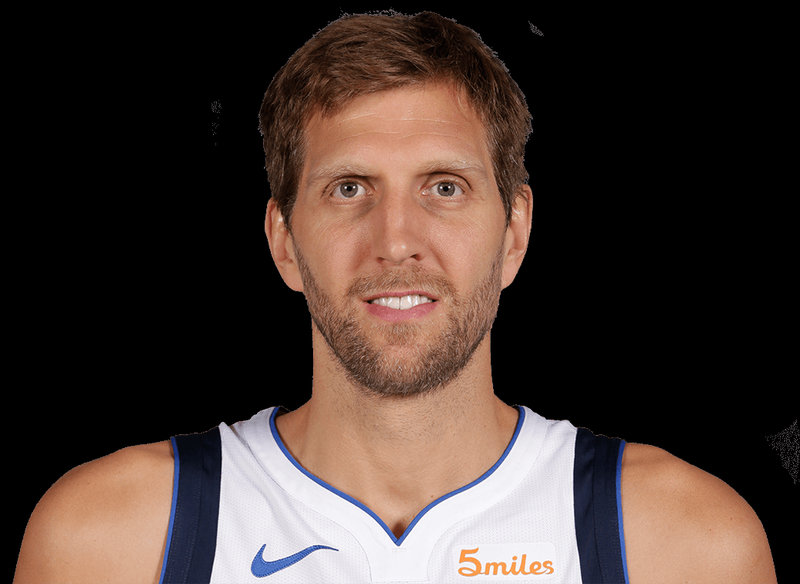
Why is Dirk Nowitzki’s final-era defense underrated by many fans?
Why do many fans rate Dirk Nowitzki’s later-in-his-career defense as not so good? This has puzzled diehard basketball fans for years. Nowitzki is far better known for his scoring ability and his on-court leadership than he is for defense. Yet, his final-era defensive contributions and capabilities seem worthy of a closer look. By metrics and narratives that concerned fans tend to overlook, his defense could reasonably be rated as at least decent—if not better—without needing to carry any added weight of good intentions.
The Numbers Behind Nowitzki’s Defense
To value Dirk Nowitzki’s defensive strength from the final years of his career, we must consult several all-too-revealing key statistics. One is Defensive Rating (DRtg), which tells us something about how good, or bad, a player was defensively, or something about how good a defense is when a certain player is on the floor. Well, during Nowitzki’s last season, he posted a Defensive Rating of 107. Now, what does that mean? What that means is that the Dallas Mavericks, for whom he played, allowed 107 points per 100 possessions while he was on the floor—not great, but competitive with his peers.
During the 2016-2017 season, Nowitzki forced opponents to shoot only 43.4% in the paint, while he was defending. Furthermore, the player’s defensive win shares (DWS) totaled 0.8 in his last year in the league, illustrating just how much he held up his end of the bargain on that side of the court. Furthermore, he posted a block rate of 1.2%, demonstrating that he was still capable of changing shots near the basket. Moreover, even higher-level statistics like Player Efficiency Rating (PER) show that in his last three seasons, his overall PER was a pretty balanced performance between offense and defense. This statistical evidence contradicts the half-baked notion that Nowitzki’s defense was entirely lacking.
Defensive Awareness and Positioning
Aside from statistics, Dirk Nowitzki was late in his career what one might call a “defensive stalwart.” His defensive awareness was superb, and his defensive positioning was nothing short of magnificent. One aspect of defense that is oftentimes overlooked is a player’s ability to read the game. Nowitzki, whether on or off the ball, excelled in this regard. He was able to do so because he had seen virtually every play that an offense could run over the course of 14 NBA seasons and had an idea of what was coming next. Because of this experience, he was able to anticipate plays and position himself as needed.
In addition, his skill at guarding several positions led to mismatches that benefitted the Mavericks. During the 2015-2016 season, Nowitzki frequently was paired against speedier forwards. Still, he maintained his composure, showing an almost preternatural control of space and angles. This is where foot speed comes into play. Fans certainly understand that the better a player can move his feet, the better his chances of having a favorable impact on defense.
Why is Dirk Nowitzki’s Final-Era Defense Underestimated?
Why is the final-era defense of Dirk Nowitzki underrated by many fans? One reason is the overshadowing presence of his offensive skills. As Nowitzki revolutionized the power forward position with his shooting range and his scoring ability, it drew attention away from his defensive contributions. Moreover, he played in an era where high-scoring offenses reduced the emphasis placed on defensive metrics.
Thus, in contrast, high-scoring offenses reduced the worth placed on defensive stats. Moreover, the storyline about aging athletes tends to focus on decline. When it comes to the NBA, retirement ceremonies and tribute videos often veer toward a conversation about what was lost in the last few years of an athlete’s career rather than what was gained. When we do talk about gains, we’re mostly talking about points scored.
The other element is the changing shape of the NBA. The pace-and-space style has given a new sheen to offensive metrics, which has made defensive metrics seem less valuable. As teams concentrate on three-point shooting, with all the not-so-obvious floor spacing that requires, and the fast, barely controlled transitions that make up too much of our modern basketball lives, the very idea of a “defensive contribution” changes its meaning.
Impact on Team Defense
While Dirk Nowitzki’s defense may not have been the highest-rated, his overall impact on team defense is noteworthy. The Dallas Mavericks, during the latter part of his career, consistently ranked among the top defensive teams, and that can partly be attributed to Nowitzki.
Why? Well, first off, I’d like to commend Nowitzki for being a good communicator on the court. He spoke to teammates, offered necessary guidance, and helped them understand what they needed to do defensively. That right there, folks, is invaluable. Nowitzki allowed the younger, more inexperienced players on the team to be.
During their run to the championship in 2011, Dirk Nowitzki’s ability to switch on screens and contest shots was a big part of the Mavericks’ defensive strategies. His intelligence allowed the team to really disrupt offensive flow—something that, as far as I can tell, is an underrated and often overlooked aspect of team dynamics. When fans think about a player’s value, they tend to only think about how many points a player scores, how many rebounds he grabs, or how many assists he dishes out. But defensive effectiveness has a lot to do with teamwork and communication.
Conclusion: A Legacy Beyond Scoring
To sum up, Why do many fans underrate Dirk Nowitzki’s defense in the last era of his career? The answer is found at the intersection of perception and reality. Much attention was rightly given to his offensive superpowers, but his defensive contributions were just as vitally important and often not acknowledged. In looking at some of the regrettable aspects of his later-stage-on offense, we’ll also have to reconsider some of the regrettable aspects of his later-stage defense while trying to understand what made both parts of his game go downhill.
When we examine the account associated with Nowitzki’s legacy, we must consider the appearance of him playing in defensive events. Despite being known primarily as a scorer, the German left a significant impression on that side of the court. This analysis serves to enrich our understanding of the truly multifaceted Nowitzki.
Explore More on us
Discover insightful blogs on our Blogging Space, check our SoloStat Score Explanation, and learn more about NBA All-Defensive Team.